Clean Vehicle Federal Tax Credit: Eligibility, Income Caps, and Point-of-Sale Transfer Rules
A detailed guide to the federal clean vehicle tax credit, covering income caps, vehicle price thresholds, point-of-sale dealer transfers, and tax recapture mechanics.
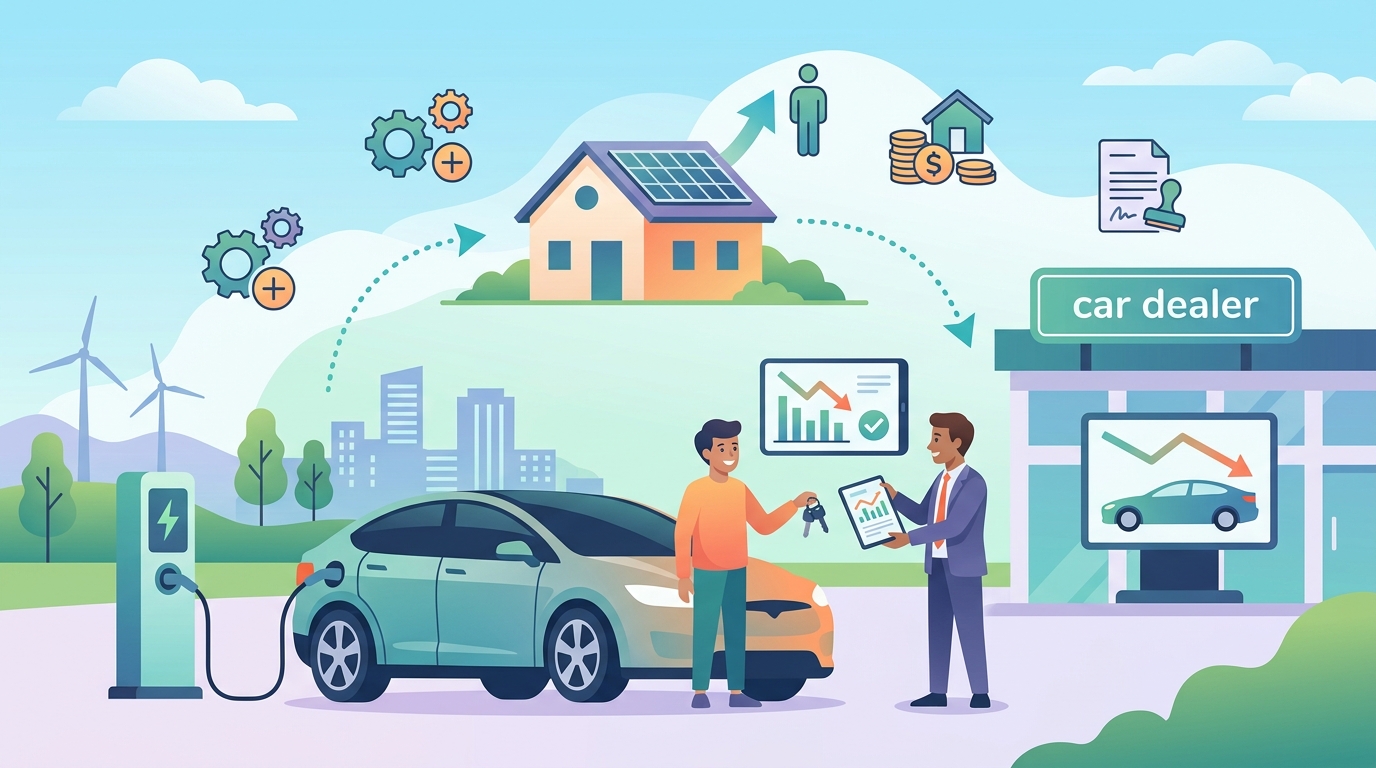
Overview of Federal Clean Vehicle Tax Incentives
The federal government provides tax incentives to encourage the adoption of electric, plug-in hybrid, and fuel cell vehicles under Internal Revenue Code Section 30D for new vehicles and Section 25E for previously owned vehicles (Source 1). Enacted as part of major federal energy legislation, these programs aim to lower the upfront purchase cost of zero-emission and low-emission transportation while incentivizing domestic manufacturing and supply chain independence (Source 1).
Under the current statutory rules, eligible consumers can receive a tax credit worth up to $7,500 for a qualifying new clean vehicle or up to $4,000 for a qualifying used clean vehicle (Source 1). A significant update to the administrative structure allows buyers to transfer the value of the tax credit directly to a participating motor vehicle dealer at the point of sale (Source 1). This mechanism reduces the vehicle's purchase price immediately at the dealership, rather than requiring buyers to wait until filing their annual federal tax return (Source 1).
However, eligibility for these credits is strictly regulated by federal statutory criteria. Qualification depends on several distinct factors: the buyer's Modified Adjusted Gross Income (MAGI), the vehicle's Manufacturer's Suggested Retail Price (MSRP) or sale price, battery sourcing requirements, and assembly locations (Source 1). Understanding these parameters before shopping helps ensure buyers avoid tax clawback scenarios or unexpected liabilities at tax filing time.
Modified Adjusted Gross Income (MAGI) Eligibility Caps
To focus tax incentives on middle-income and working-class households, federal regulations impose strict income caps for both new and used clean vehicle credits (Source 1). Income eligibility is measured using Modified Adjusted Gross Income (MAGI), which is generally defined as Adjusted Gross Income (AGI) plus certain excluded foreign income or housing costs (Source 1).
For the new clean vehicle credit under Section 30D, a taxpayer's MAGI cannot exceed specific thresholds based on their federal tax filing status in either the taxable year the vehicle is placed in service or the preceding taxable year (Source 1). If a taxpayer's income falls below the limit in at least one of those two tax years, they satisfy the income criteria for the credit (Source 1).
| Filing Status | New Clean Vehicle MAGI Limit | Used Clean Vehicle MAGI Limit |
|---|---|---|
| Married Filing Jointly / Surviving Spouse | $300,000 | $150,000 |
| Head of Household | $225,000 | $112,500 |
| Single / Married Filing Separately | $150,000 | $75,000 |
For example, consider a single taxpayer who purchases a new qualifying electric car in 2024. If their MAGI is $160,000 in 2024 but was $142,000 in 2023, the taxpayer qualifies for the full credit because their prior-year income remained below the $150,000 ceiling (Source 1). Conversely, if a taxpayer's MAGI exceeds the statutory ceiling in both the year of purchase and the preceding year, they cannot claim the tax credit, even if the vehicle itself satisfies all technical manufacturing rules (Source 1).
Vehicle Price Caps and MSRP Classifications
In addition to buyer income limits, federal law caps the maximum price of vehicles that qualify for tax incentives (Source 1). For new clean vehicles, the price threshold is determined by the vehicle's Manufacturer's Suggested Retail Price (MSRP), as reported on the factory window sticker (Monroney label) (Source 1). The MSRP includes optional equipment physically attached to the vehicle prior to shipment, but excludes destination fees, dealer documentation fees, dealer-installed accessories, and local taxes (Source 1).
The statutory MSRP cap varies depending on how the Environmental Protection Agency (EPA) and Department of Energy classify the vehicle type (Source 1):
- Vans, Sport Utility Vehicles (SUVs), and Pickup Trucks: Maximum MSRP of $80,000 (Source 1).
- All other passenger cars (sedans, hatchbacks, station wagons): Maximum MSRP of $55,000 (Source 1).
| Vehicle Category | Statutory Vehicle Types | Maximum Qualifying MSRP |
|---|---|---|
| Higher Capacity / Utility | SUVs, Vans, Pickup Trucks | $80,000 |
| Standard Passenger | Sedans, Hatchbacks, Wagons | $55,000 |
Vehicle classification is determined by official federal fuel economy guidelines, which evaluate body structure, ground clearance, and gross vehicle weight ratings (Source 1). Buyers must verify the precise classification of a specific trim level before purchase. For instance, a basic trim level of a crossover sedan might fall under the $55,000 limit, while an all-wheel-drive performance variant of the same car could exceed the cap and lose eligibility entirely (Source 1).
Battery Sourcing and Domestic Manufacturing Requirements
The $7,500 maximum credit for new clean vehicles is split into two distinct requirements of $3,750 each (Source 1). A vehicle may qualify for the full $7,500, a partial credit of $3,750, or $0 based on how its supply chain meets federal origin rules (Source 1).
The two component metrics evaluated by federal regulations are:
- Critical Minerals Component ($3,750): A minimum percentage of the value of applicable critical minerals in the battery must be extracted or processed in the United States or a country with which the U.S. has a free trade agreement in effect, or recycled in North America (Source 1).
- Battery Components ($3,750): A minimum percentage of the value of the components contained in the battery must be manufactured or assembled in North America (Source 1).
Furthermore, vehicles must undergo final assembly within North America to qualify for any portion of the Section 30D tax credit (Source 1). Strict Foreign Entity of Concern (FEOC) rules also apply. Vehicles containing battery components manufactured or assembled by a foreign entity of concern—or critical minerals extracted, processed, or recycled by an FEOC—are entirely excluded from qualifying, regardless of price or income considerations (Source 1).
Mechanics of the Point-of-Sale (POS) Credit Transfer
Taxpayers purchasing an eligible vehicle have the option to transfer the full value of the clean vehicle credit to an eligible, registered dealer at the time of purchase in exchange for a direct financial benefit (Source 1). This point-of-sale transfer mechanism operates through the IRS Energy Credits Online portal (Source 1).
When utilizing the point-of-sale transfer option, the transaction must follow a specific administrative workflow:
- Dealer Registration: The selling dealership must be registered with the IRS Energy Credits Online network prior to the sale (Source 1).
- Real-Time Verification: At the dealership, the salesperson submits vehicle details—including the Vehicle Identification Number (VIN)—into the portal to verify eligibility before completing the bill of sale (Source 1).
- Immediate Benefit Distribution: The dealer provides the benefit to the buyer in the form of a direct cash payment, a reduction in the required cash down payment, or a partial payment toward the vehicle sale price equal to the full credit amount (Source 1).
- Seller Report Confirmation: The dealer submits a seller report through the IRS system and provides a printed copy of the successful submission receipt to the buyer (Source 1).
The point-of-sale transfer does not alter the buyer's obligation to meet statutory MAGI rules. Even though the dealer applies the discount immediately at the showroom, the buyer remains legally responsible for verifying their own tax eligibility (Source 1).
Used Clean Vehicle Credit (Section 25E) Standards
Buyers considering previously owned electric or plug-in hybrid vehicles can access tax benefits under Internal Revenue Code Section 25E (Source 1). The credit for a used clean vehicle equals 30% of the sale price, up to a maximum credit of $4,000 (Source 1).
To qualify for the used vehicle tax credit, the transaction and the vehicle must satisfy distinct standards defined by federal regulations (Source 1):
- Purchase Price Cap: The total sale price of the vehicle cannot exceed $25,000 (Source 1).
- Model Year Requirement: The vehicle model year must be at least two years older than the calendar year in which it is purchased (e.g., a 2022 model year vehicle purchased in 2024) (Source 1).
- Dealer Purchase: The vehicle must be purchased from a licensed motor vehicle dealer; private party sales do not qualify (Source 1).
- First Transfer Rule: The credit is allowed only for the first transfer of the vehicle after August 16, 2022, other than to the original owner (Source 1).
- Buyer Eligibility: The buyer must be an individual purchasing the vehicle for personal use, cannot be claimed as a dependent on another tax return, and cannot have claimed a Section 25E used clean vehicle credit during the prior three years (Source 1).
Tax Filing Mechanics and Recapture Rules
Regardless of whether a buyer claims the clean vehicle credit as a point-of-sale dealer discount or as a credit on their annual tax filing, they must file IRS Form 8936 (Clean Vehicle Credits) with their federal income tax return for the tax year the vehicle was placed in service (Source 1). The form reconciliation links the seller report submitted by the dealer with the buyer's Taxpayer Identification Number (TIN).
A key provision of federal clean vehicle credit regulation involves income recapture rules (Source 1). If a buyer elects to receive an immediate point-of-sale price reduction at the dealership, but their actual MAGI exceeds the statutory limit in both the year of purchase and the preceding year, the buyer must pay back the transferred credit amount to the federal government (Source 1).
This repayment is calculated during annual tax return preparation. The excess transferred credit is added directly to the taxpayer's total tax liability for the tax year (Source 1). For example, a single taxpayer who receives an upfront $7,500 point-of-sale rebate on a new EV but reports a MAGI of $160,000 for both the purchase year and the prior year will owe an additional $7,500 on their annual IRS tax return (Source 1). However, if the buyer's income exceeds the limit, the dealer is not required to return the advance payment to the government; the repayment liability rests entirely on the buyer (Source 1).
What happens if my income is too high after I receive the point-of-sale discount?
If your Modified Adjusted Gross Income exceeds the statutory limits in both the year you take delivery of the vehicle and the previous tax year, you must repay the full amount of the point-of-sale advance payment as an additional tax liability when filing IRS Form 8936 with your federal tax return (Source 1).
Can leased electric vehicles receive the federal clean vehicle tax credit?
Commercial clean vehicle rules (Section 45W) apply to business-leased vehicles. Under commercial rules, the tax credit is claimed directly by the leasing company (the vehicle owner), which may choose to pass down savings to the lessee in the form of lower monthly lease payments, though distinct eligibility rules apply compared to personal purchases (Source 1).
Do used electric cars bought from a private seller qualify for the $4,000 tax credit?
No. Under Section 25E guidelines, used clean vehicle purchases must be conducted through a licensed motor vehicle dealership that reports the sale details directly to the IRS via the Energy Credits Online portal (Source 1).
Sources
- Federal Tax Credits for New Plug-in Electric Drive Motor Vehicles — U.S. Department of Energy
This article is for general information only and is not professional advice. Figures come from public sources and change over time; check the official source before you act.
More from Inside Life Digest
- Gap Insurance Cost Breakdown: Pricing, Depreciation Curves, and When Coverage Is Necessary
- Long-Term Care Insurance Cost Breakdown: Premiums, Elimination Periods, and Benefit Triggers
- Evaluating Private Student Loan Refinancing: Interest Rate Mechanics, Federal Protection Losses, and Savings Calculus
- Comprehensive Travel Insurance: Medical Evacuation, Cancellation, and Pre-Existing Condition Waivers
- Revocable Living Trust vs. Will: Cost, Probate Avoidance, and Asset Transfer Rules
- Cyber Insurance Requirements for Small Businesses: Coverage Limits and Underwriting Criteria